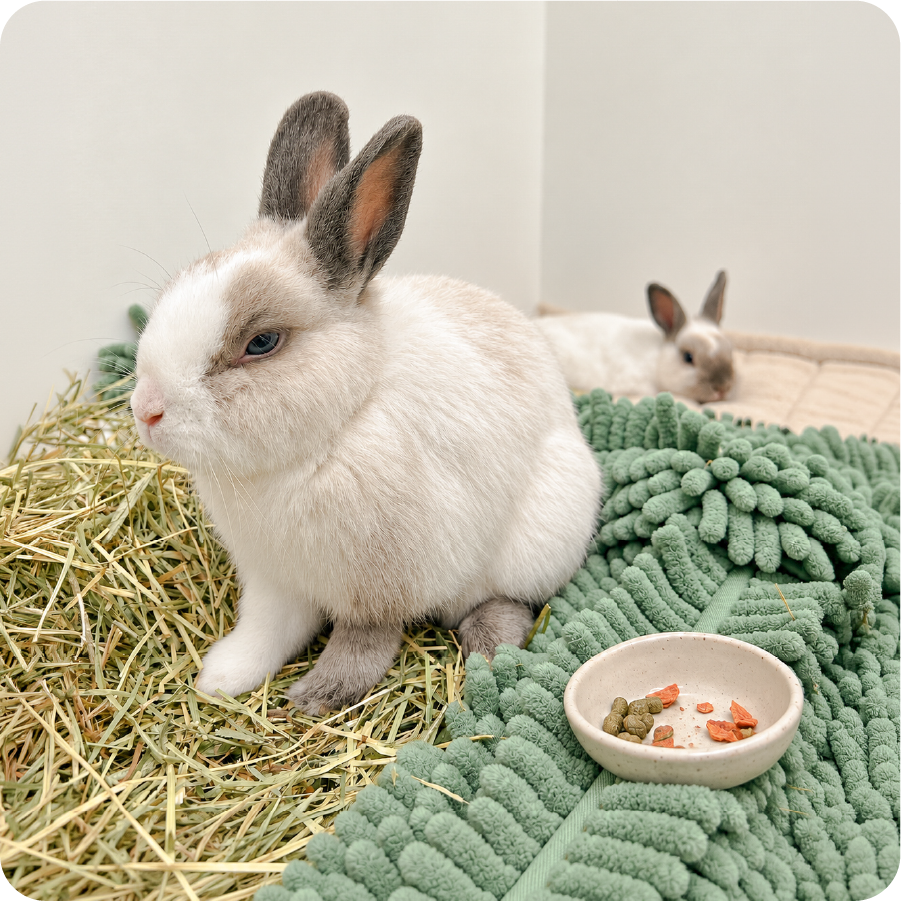
If your rabbit runs to the pellet bowl but leaves the hay untouched, it is easy to assume they are simply being picky. Sometimes that is exactly what is happening. Pellets and treats are often faster to eat and more aromatic than plain grass hay, so a rabbit may learn to wait for the more rewarding option.
However, a rabbit refusing hay can also be an early sign of dental pain, digestive slowdown, stress, dehydration, or another health problem. The pattern matters: a gradual preference for pellets is different from a rabbit that suddenly stops eating hay.
The short answer: Check your rabbit’s overall appetite, droppings, energy level, and chewing behavior first. If the change is sudden or comes with other symptoms, contact a rabbit-experienced veterinarian. If medical causes have been ruled out, you can begin adjusting the feeding routine so fresh, long-strand hay becomes the easiest and most natural choice again.
Why Is Hay So Important for Rabbits?
Long-strand grass hay should remain available throughout the day. It supports two needs that softer, concentrated foods cannot fully provide:
Normal digestive movement: Rabbits are hindgut fermenters, and fiber is essential to normal gastrointestinal motility.
Prolonged chewing: Rabbits’ teeth grow continuously. The side-to-side chewing required for grass and hay helps maintain normal dental wear.
Hay also encourages natural grazing behavior. Instead of finishing a calorie-dense meal quickly, a rabbit can eat small amounts over many hours, as their digestive system is designed to do.
Hay powder may add hay-based fiber and plant ingredients to the daily routine, but it does not create the same chewing time or physical fiber structure as long-strand hay. Think of it as a supplementary food—not a replacement for the hay rack.
First, Is This an Emergency?
Do not begin a “picky eater” plan if your rabbit appears unwell. Contact a rabbit-experienced veterinarian urgently if your rabbit:
Stops eating all foods or refuses favorite foods
Produces fewer, smaller, or no droppings
Becomes unusually quiet, weak, or withdrawn
Sits hunched or repeatedly changes position as if uncomfortable
Has a firm or visibly bloated abdomen
Grinds their teeth loudly in pain
Drools, has a wet chin, drops food, or struggles to chew
A reduced appetite and reduced fecal output can be signs of gastrointestinal stasis, which is a syndrome caused by an underlying problem such as pain, dental disease, dehydration, stress, inappropriate diet, or obstruction.
Important: Do not force-feed a rabbit with a swollen abdomen or suspected blockage unless a veterinarian has examined the rabbit and instructed you to do so. Syringe feeding can be inappropriate when an obstruction is possible.
Why Won’t My Rabbit Eat Hay? 7 Common Reasons
1. Dental Pain Makes Hay Harder to Chew
A rabbit may still accept pellets, soft foods, or treats while avoiding hay because hay requires more chewing. This selective eating can be one of the earliest clues of molar problems.
Watch for slower chewing, dropping food, eating on one side, a wet chin, weight loss, smaller droppings, watery eyes, or a new preference for soft food. The front teeth may look normal even when the back teeth are painful, so a rabbit-experienced veterinary dental examination is important.
2. Pellets and Treats Are Filling Them Up
If a rabbit receives frequent pellets, dried fruit, cookies, cereal mixes, or other concentrated foods, they may simply have little reason to eat hay. These foods are quick to consume and often more flavorful than grass hay.
This does not mean you should suddenly remove everything else and wait for hunger to win. Abrupt diet changes can be risky, especially if the rabbit already eats very little hay. Once illness has been ruled out, reduce competing foods gradually while closely monitoring appetite, droppings, and body weight.
Young, pregnant, nursing, underweight, elderly, or chronically ill rabbits may have different nutritional needs. Ask a rabbit-experienced veterinarian before making a major diet change.
3. The Hay Is Stale, Damp, Dusty, or Unappealing
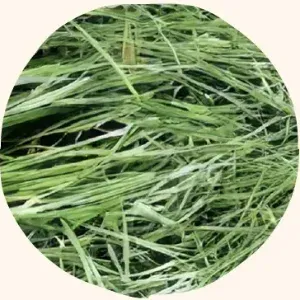
Rabbits notice aroma and texture. Hay that has lost its fresh grassy smell, absorbed moisture, become dusty, or sat compressed in a rack for too long may be ignored.
Choose hay that smells fresh and is dry, clean, and free from mold. Store it in a cool, ventilated place, and replace old hay with fresh handfuls several times a day. Adding new hay on top of an enormous pile of stale hay is rarely convincing.
4. Your Rabbit Dislikes That Type or Cut of Hay
Some rabbits prefer softer orchard grass, while others enjoy the coarser stems of Timothy hay. Meadow hay and oat hay also have different aromas and textures. Even two bags of the same variety can differ because hay is an agricultural product.
Offer two small piles side by side and observe which strands your rabbit chooses. Once you find an appealing variety, you can gradually blend in other textures. For most healthy adult rabbits, the best grass hay is ultimately the one they will eat consistently and in generous amounts.
5. The Hay Is in the Wrong Place
Presentation matters more than many owners expect. Rabbits often like to eat while using their litter box, resting, or watching what is happening around them.
Try placing fresh hay:
Beside or above the litter box, where it stays clean
In several easy-to-reach feeding stations
In a loose pile as well as a hay rack
Inside a paper bag, cardboard tube, or forage box for supervised enrichment
If your rabbit is older, has arthritis, or has limited mobility, make sure the hay does not require stretching, climbing, or an uncomfortable posture.
6. Stress or a Routine Change Has Reduced Their Appetite
Moving, travel, loud construction, a new pet, bonding sessions, temperature changes, or the loss of a companion can affect eating behavior. Rabbits are prey animals and may hide discomfort or stress until their routine changes noticeably.
Keep food, water, litter boxes, hiding places, and daily schedules predictable. If appetite does not return quickly—or droppings become smaller or less frequent—contact a veterinarian rather than assuming stress is the only cause.
7. Another Health Problem Is Affecting Appetite
Pain does not have to begin in the mouth. Urinary discomfort, arthritis, infection, respiratory disease, liver or kidney problems, dehydration, and gastrointestinal disorders can all reduce a rabbit’s desire to eat.
A sudden change in hay intake is useful health information. Note when it began, what foods your rabbit still accepts, whether water intake changed, and what the droppings look like. These details can help your veterinarian investigate the underlying cause.
How to Get a Rabbit to Eat More Hay
Once a veterinarian has ruled out pain and illness, focus on your rabbit’s feeding environment and daily routine to encourage hay eating.
1. Serve Fresh Hay More Often
Offer smaller fresh handfuls several times a day. Fluff the hay to release its aroma and remove soiled or flattened portions. Many rabbits investigate hay as soon as they hear a new handful being added.
2. Test Different Grass Hays
Try Timothy, orchard grass, meadow hay, or oat hay. Test different cuts and suppliers in small quantities before buying a large box. Transition between foods gradually.
3. Make Hay Easy to Reach
Place it near the litter box and favorite resting areas. Use a low, wide feeding setup for rabbits with mobility challenges. Multiple hay stations can help in multi-rabbit homes.
4. Keep Track of Pellets and Treats
Avoid continually topping off the pellet bowl. Measure the pellets and treats you offer so you can keep track of how much your rabbit actually eats. If your veterinarian agrees that these foods are crowding out hay, reduce them gradually rather than all at once.
5. Encourage Natural Foraging
Hide hay in safe cardboard toys, loosely fill a paper bag, or mix different grass hays together. The goal is to make grazing easy and interesting without coating hay in sugar or relying on fruit at every meal.
6. Support Hydration
Provide fresh water at all times. Many rabbits drink more comfortably from a heavy ceramic bowl than from a bottle. Water-rich leafy greens may also contribute to fluid intake when they are appropriate for your rabbit and introduced gradually.
7. Track Progress Instead of Guessing
Monitor:
How often you replace the hay
Which hay varieties disappear first
Daily droppings and any change in their size
Body weight on a consistent schedule
Energy, posture, and interest in food
The goal is not simply to see your rabbit try hay once. You want a consistent pattern of frequent hay eating, normal droppings, and a healthy, stable body condition.
Where Gastrointestinal & Hairball Care Hay Powder Fits In
For a rabbit who has been checked by a veterinarian but remains accustomed to strongly flavored pellets, treats, or sweet snacks, a mild hay-based supplementary food can help support the transition back to a hay-centered routine.
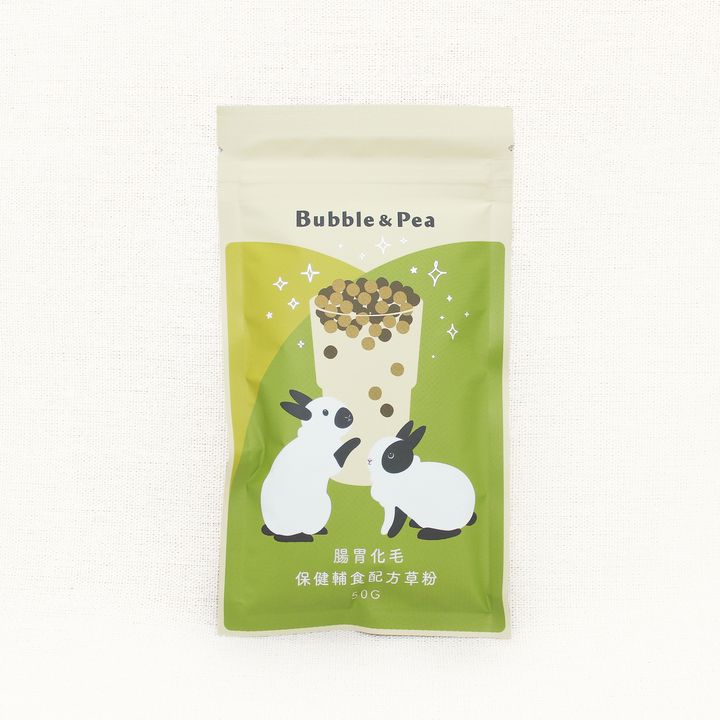
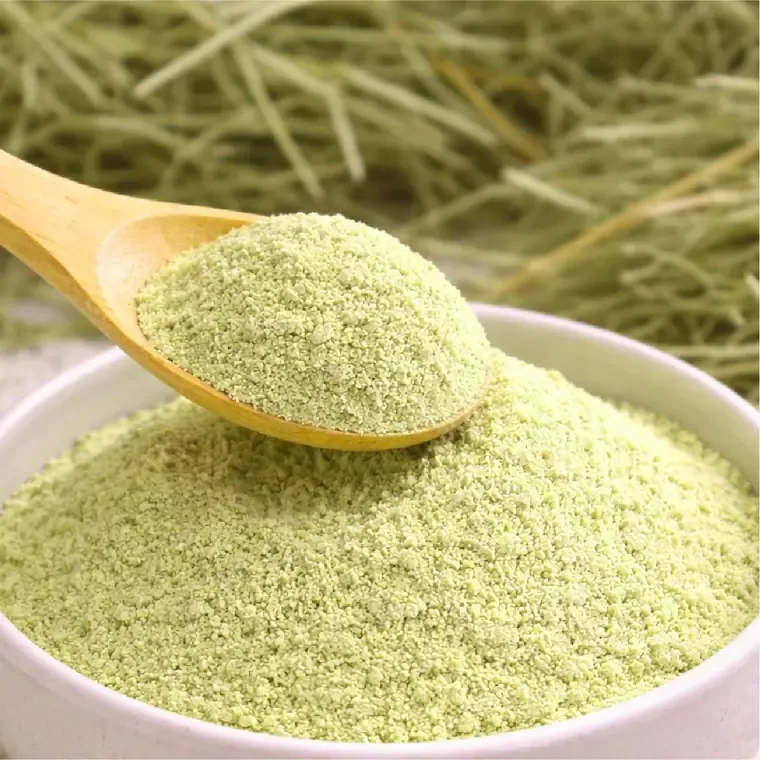
Bubble & Pea Gastrointestinal & Hairball Care Hay Powder is made primarily with orchard grass and Timothy hay, together with apple, pineapple, papaya, red bell pepper and okra. It contains 27–29% crude fiber and has no grains, soy, or fillers.
Mixed with water into a soft puree, it provides hay-based fiber, whole-food plant ingredients, and additional moisture. Its deliberately mild flavor helps rabbits become familiar with a more natural, hay-based taste as part of their daily feeding routine. Long-strand hay should remain available at all times.
For owners moving toward a diet with fewer or no pellets, the formula can serve as a supplementary food in place of conventional pellets, with consideration for the rabbit’s life stage, body condition, health, and overall diet.
How to Offer It
Start with approximately 5 g of hay powder per day, measured before adding water.
Mix with about 15 mL of water to make a soft hay puree.
Continue providing unlimited long-strand hay and fresh water.
Make dietary changes gradually and monitor appetite, droppings, and body weight.
This formula does not treat dental disease or gastrointestinal stasis, dissolve hair, or replace veterinary care. It also does not replace the long fibers and prolonged chewing provided by long-strand hay.
New to hay powder? Explore Gastrointestinal & Hairball Care Hay Powder →
A Simple Hay-Routine Checklist
Before assuming your rabbit is just picky, ask:
Did my rabbit’s hay intake change suddenly?
Are the droppings smaller or less frequent?
Is my rabbit still eating favorite foods?
Are there signs of dental pain or difficulty chewing?
Is the hay fresh, fragrant, dry, and easy to reach?
Have pellets, treats, or sweet foods crowded out hay eating?
Have I tried a different grass hay, cut, or supplier?
Is my rabbit’s weight stable?
If you notice any health concerns, start with a veterinary check. If your rabbit is healthy but has learned to hold out for pellets and treats, consistent changes to the daily feeding routine are usually a better long-term approach than adding stronger flavors.
FAQ
Q Why does my rabbit eat pellets but not hay?
Pellets may be easier to chew, faster to eat, and more appealing than hay. Overfeeding pellets can reduce hay intake, but selective eating can also be an early sign of dental pain. If the change is sudden or your rabbit has difficulty chewing, loses weight, produces smaller droppings, drools, or seems less energetic, arrange an examination with a veterinarian experienced in rabbit care.
Q How long can a rabbit go without eating hay?
A rabbit should not routinely go without hay. More importantly, a rabbit that stops eating altogether or produces fewer droppings may be developing a serious gastrointestinal problem. Do not wait for a specific number of hours if your rabbit appears painful, lethargic, bloated, or unwell—seek urgent veterinary care.
Q What is the best hay for a picky rabbit?
For most healthy adult rabbits, suitable grass hays include Timothy, orchard grass, meadow hay, and oat hay. Freshness matters, and individual preferences differ. The best starting choice is a clean, fragrant grass hay that your rabbit will eat consistently.
Q Should I remove pellets until my rabbit eats hay?
Do not abruptly remove the food your rabbit reliably eats or try to “starve out” picky behavior. First rule out health problems. If your veterinarian agrees that pellets and treats are reducing hay intake, decrease them gradually while monitoring droppings, weight, and overall appetite.
Q Can hay powder replace long-strand hay?
No. Hay powder can provide additional hay-based fiber and plant nutrition, but it cannot reproduce the prolonged chewing or physical fiber structure of long-strand hay. Rabbits should continue to have unlimited access to long-strand hay.
Q Can Gastrointestinal & Hairball Care Hay Powder encourage my rabbit to eat more hay?
Our customers report that their rabbits become more interested in eating hay after adding our formula to their daily routine.
Its mild, hay-based flavor is designed to help rabbits become familiar with a hay-centered diet without relying on strongly flavored foods to encourage eating. Continue offering fresh, unlimited long-strand hay alongside it.
Q Is a rabbit not eating hay always a dental problem?
No. Dental disease is one important possibility, but excessive pellets, unappealing hay, stress, dehydration, mobility limitations, and other illnesses may also reduce hay intake. A veterinarian should assess sudden or persistent changes.
References
University of Illinois College of Veterinary Medicine: Rabbit Gastrointestinal Stasis Syndrome
Royal Veterinary College: Rabbit Dental Issues and Services
Rabbit.org Foundation: GI Stasis—The Silent Killer
This article is for general educational purposes and does not replace diagnosis or treatment by a rabbit-experienced veterinarian.