

6 Formulation Pitfalls and Safe Feeding Practices
Not all commercial rabbit foods are something to fear.
What we should watch for are mixed seed-and-grain formulas that allow rabbits to selectively eat only certain pieces, high-calorie additions such as dried fruit and seeds, “high-fiber” claims that may lead rabbit owners to believe the product can replace hay, and long-term free-feeding that throws the overall diet out of balance.
This article explains which ingredients are not automatically cause for concern, which situations are true warning signs, and why hay powder itself is not the problem. Hay powder can be used as an everyday supplemental food, but it still cannot replace hay as the dietary staple.
Do You Know What Can Make Commercial Rabbit Food Ingredients Concerning?
When you open a bag of rabbit food, you may see a long list of ingredients such as grains, legumes, hay meal, molasses, vitamins, and minerals.
What deserves particular attention is a type of food that encourages selective eating, is high in calories but low in fiber, is not appropriate for the rabbit’s life stage, or recommends feeding too much. Over time, these issues can gradually push the most important food—hay—out of the rabbit’s daily diet.
Products commonly sold as “rabbit food” generally fall into two broad categories:
| Type | Uniform Pelleted Rabbit Food | Mixed Seed-and-Grain Rabbit Food (Muesli-Style Mixes) |
|---|---|---|
| Appearance | Each piece looks similar and has a similar composition | Contains a mixture of flakes, corn, legumes, seeds, dried fruit, or colorful pieces |
| Characteristics | Less likely to allow selective eating; easy to portion and use as a nutritional supplement | Looks varied and is often more palatable |
| Main Risks | Overfeeding may reduce hay intake, and pellets still cannot replace the long-strand fiber provided by hay | Rabbits may eat only their favorite high-calorie pieces, leading to an unbalanced diet |
Both the RSPCA and the Rabbit Welfare Association & Fund (RWAF) advise against feeding muesli-style rabbit food.
A 17-month University of Edinburgh study involving 32 rabbits also found that muesli-style diets were associated with smaller, lighter fecal pellets and more uneaten cecotropes. Rabbits that ate more hay had greater fecal output. Study summary
The 6 Formulation and Feeding Pitfalls That Truly Matter
➊ It Looks Varied, but It Allows Selective Eating
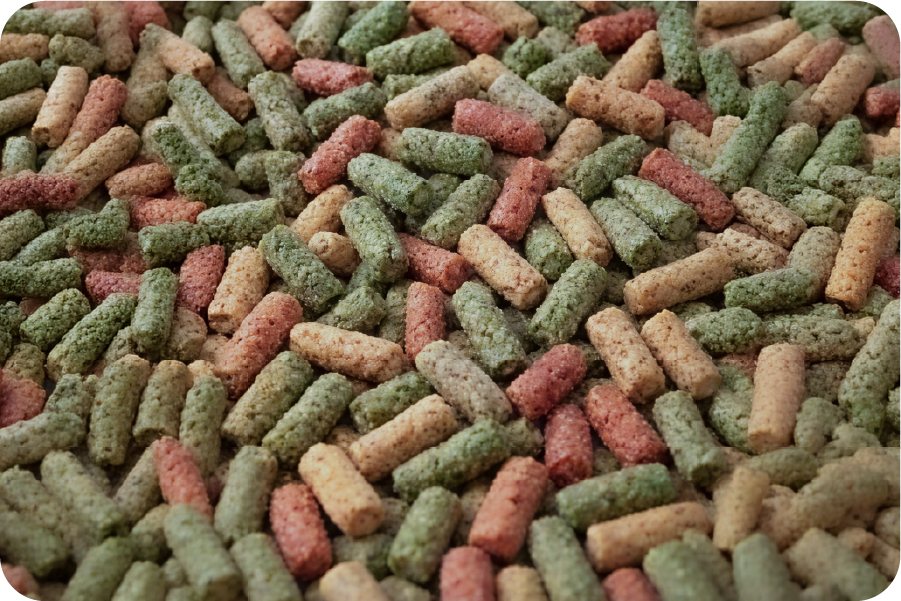
Dried fruit, grain flakes, seeds, and colorful shaped pieces may look more appealing than uniform pellets, and rabbits often eat the sweet, flavorful pieces first.
When every bite contains something different, it becomes difficult for rabbit owners to know whether their rabbit is consuming the intended nutritional balance or simply choosing the highest-calorie pieces.
If a bag of rabbit food looks like breakfast cereal and you can clearly pick out the different ingredients, that should be a warning sign. For most pet rabbits, uniform pelleted rabbit food is easier to manage.
➋ “Natural” Dried Fruit, Nuts, and Seeds
Natural does not mean suitable for feeding in large amounts.
Once the water is removed from fruit, its sugar and calories become more concentrated. Nuts and seeds are also high in fat. These ingredients may make a product more palatable, but they are not the foundation of a rabbit’s daily high-fiber diet.
The Merck Veterinary Manual recommends choosing a good-quality rabbit food without added dried fruit or nuts because rabbits may selectively eat these additions and leave the pellets behind.
There is no need to panic simply because you see these ingredients. We only need to understand which ingredients are appropriate for rabbits and how much they should consume in order to make a suitable choice.
➌ It Is Marketed as High in Fiber, Leading People to Believe Hay Is Unnecessary
According to general guidance from the Merck Veterinary Manual, rabbit pellets may contain approximately 15%–20% crude fiber. For commercial complete rabbit food, the RWAF recommends looking for a fiber level of approximately 20% or higher.
However, the crude fiber percentage only tells you the measured proportion of crude fiber in the product. It does not fully describe the length of the fiber, the physical form of the food, or how long the rabbit needs to chew it.
Pellets are ground, mixed, and pressed into shape, so rabbits can usually finish them quickly. Hay requires repeated side-to-side grinding and provides a longer period of eating and foraging.
A high-fiber pellet may be a better supplemental food, but it is still not a substitute for hay.
➍ The Ingredient Names Sound Technical, So Owners Assume More Must Be Better
Names such as vitamins, minerals, and amino acids may read like a chemistry textbook, but they are not necessarily bad ingredients. Commercial rabbit food may be formulated with these nutrients to compensate for nutritional differences in everyday forage caused by growing region, season, and storage.
Conversely, a short ingredient list does not guarantee complete nutrition. When choosing a product, check whether the labeling and nutritional information are complete, whether it is appropriate for the rabbit’s current life stage, and whether it contains unnecessary high-sugar or high-fat ingredients.
➎ Adult Rabbits, Young Rabbits, and Rabbits with Specific Needs Are All Fed the Same Product
Young rabbits, pregnant or nursing rabbits, underweight rabbits, and rabbits recovering from illness may have different nutritional needs from healthy adults. Alfalfa is generally higher in protein, calories, and calcium and is commonly used in growth formulas.
Most healthy adult rabbits are better suited to a diet based on grass hays such as Timothy, orchard grass, and oat hay.
If a product does not clearly identify whom it is intended for, or if it is fed long term simply because the rabbit likes it, that is when concern is warranted. Senior rabbits, rabbits with urinary or kidney problems, and rabbits that cannot chew normally should also be evaluated by a rabbit-savvy veterinarian.
➏ The Pellet Bowl Is Constantly Refilled While the Hay Is Mostly Decorative
Pellets are calorie-dense and easy to eat, so a rabbit may finish them very quickly. If the bowl is refilled every time it becomes empty, the rabbit will naturally be less interested in hay, which takes longer to chew.
The RSPCA recommends feeding pellets in small, measured amounts rather than continually refilling the bowl, so rabbits do not stop eating enough hay.
These Ingredients Are Not Automatically Cause for Concern—but You Need to Understand Their Role
| Common Ingredient Listing | Why It Is Not Automatically a Problem | What You Still Need to Check |
|---|---|---|
| Timothy hay meal or grass hay meal | These are plant ingredients that have been finely ground and used as the base of a formula | Whether the grass species is clearly identified and whether the overall fiber and nutritional profile are appropriate |
| Alfalfa meal | Provides more protein, calories, and calcium and is commonly used in growth formulas | Whether a healthy adult rabbit actually needs it; consult a veterinarian for rabbits with specific health needs |
| Vitamins and minerals | May be used to balance the product’s nutritional profile | More types or higher levels are not necessarily better; the formula should match the rabbit’s life stage |
| Grains, legumes, or their processed by-products | Their suitability depends on the amount used, nutritional profile, and intended purpose of the formula. The ingredient name alone is not enough to judge them | If the formula relies primarily on these ingredients rather than hay, it is not recommended as a primary everyday supplemental food for rabbits |
| Molasses or flavoring ingredients | Small amounts may be used for processing or palatability, so the name alone does not establish that an ingredient is harmful | If the product relies mainly on sweetness to attract rabbits and causes them to eat less hay, it is not suitable for routine feeding in large amounts |
| Dried fruit, seeds, and nuts | Accidentally eating a small amount does not mean immediate poisoning | They should not be major ingredients in an everyday supplemental food, and mixed products that allow selective eating should be avoided |
An ingredient list does not simply tell us that processed ingredients are bad and natural ingredients are good. It tells us which ingredients a product uses and what functions the formula is intended to provide. Understanding those functions makes it easier to decide whether the product belongs in a rabbit’s daily diet.
Hay Powder Is Not the Problem—What Matters Is What It Is Mixed With
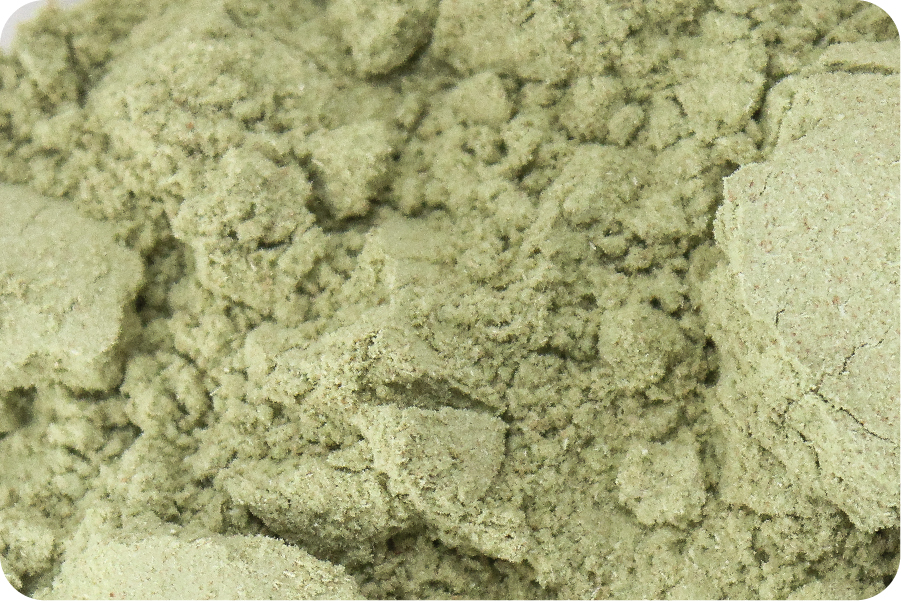
When people first see hay meal on a rabbit food label, they may associate the word “meal” with an inferior powder. However, the manufacturing process for many rabbit foods already involves grinding hay and other plant ingredients, adding the nutrients required by the formula, and then pressing the mixture into shape.
In other words, hay powder itself is not the problem. What truly matters is the grass species, source, added ingredients, overall formula, and intended feeding purpose.
When hay powder is offered separately as a plant-based supplemental food, its role is different from that of commercial rabbit food:
✦ Commercial rabbit food is formulated to balance multiple nutrients.
✦ Hay powder with a simple ingredient list makes the grass species and other ingredients easier to understand.
✦ Hay provides bulk fiber, prolonged chewing, and opportunities for natural foraging behavior.
These three foods are not substitutes for one another; each has a different place in the diet.
For rabbit owners who have previously thought of pellets as the only supplemental food, hay powder can offer a new way to understand everyday supplementation. There is no need to stop feeding the rabbit’s existing pellets all at once. Instead, introduce a small amount according to the product instructions and observe how the rabbit responds to different formulas and textures.
When the ingredients are easy to understand, choosing becomes easier:
Visit the Bubble & Pea Hay Powder Collection and explore products by feeding situation
Hay Powder Is Worth Understanding, but It Should Not Be Treated as a Miracle Solution
Bubble & Pea wants rabbit owners to feel comfortable considering hay powder—not to treat it as a solution to every problem.
Although hay powder retains plant ingredients and some fiber, its finely ground texture does not require the prolonged chewing needed to eat hay. It therefore cannot replace the chewing and natural tooth wear that hay provides.
Guidelines for using hay powder appropriately:
➀ Continue to provide unlimited hay throughout the day.
➁ Check the grass species, full ingredient list, and intended users first.
➂ Follow the product directions, begin with a small amount, and do not replace a large portion of the diet all at once.
➃ Continue monitoring appetite, hay intake, droppings, and overall behavior.
➄ If a rabbit will only eat powdered food and refuses to chew hay, have the rabbit’s teeth and overall health checked first.
A good supplemental food does not need to frighten rabbit owners to prove its value. A product is more deserving of a place in a long-term feeding plan when its ingredients are clear, its purpose is clearly defined, and it openly explains what it cannot replace in the core diet.
The Right Dietary Proportions Are the Final Safeguard
A common dietary guideline for healthy adult rabbits is:
✦ Approximately 85% hay
✦ Approximately 10% safe, washed leafy greens and herbs
✦ Approximately 5% pellets
✦ Clean drinking water available at all times
These percentages describe the overall structure of the diet. They do not mean that high-moisture leafy greens and dry hay should be converted into equal weights and measured gram for gram. Actual portions should still be adjusted according to the rabbit’s age, body condition, activity level, and health.
Before choosing a rabbit food, perform one simple check: Does your rabbit eat at least a pile of hay roughly the size of their body every day? If the answer is no, do not rush to switch to a more aromatic or more nutrient-dense pellet. First, find out why the rabbit is not eating enough hay.
Understand a Bag of Commercial Rabbit Food in 30 Seconds
Pick up the package and check the following in order:
➀ Is the Food Uniform?
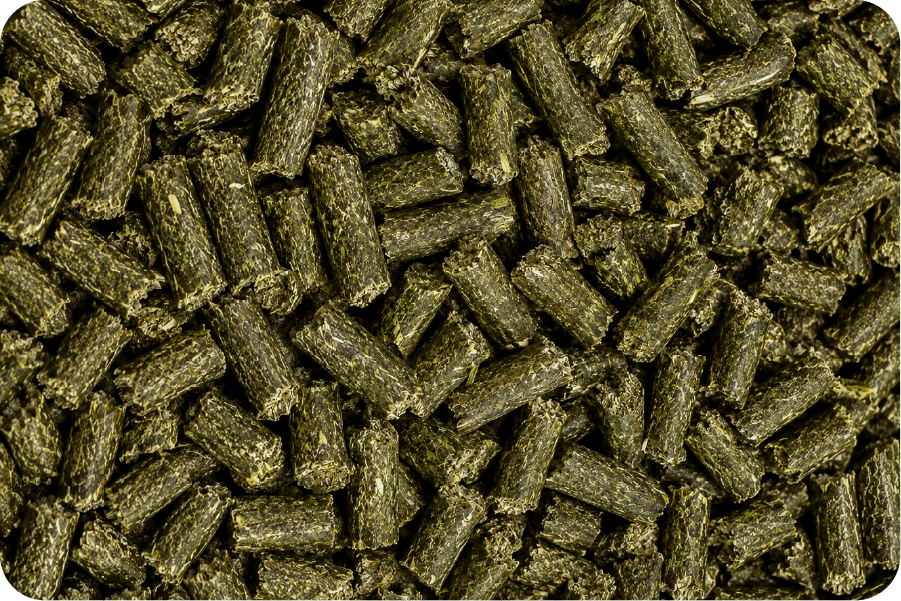
Can you pick out grain flakes, seeds, dried fruit, or colorful pieces?
➁ Does It Contain Enough Fiber?
Does the package provide complete nutritional information, rather than only using “high fiber” as a marketing claim?
➂ Are the Hay Ingredients Clearly Identified?
Can you tell whether the product contains Timothy, alfalfa, or another type of hay?
➃ Is It Appropriate for the Rabbit’s Life Stage?
Is it intended for young rabbits, adult rabbits, or rabbits with specific nutritional needs?
➄ Does It Contain Unnecessary High-Calorie Additions?
Are dried fruit, nuts, and seeds the visual focus of the product?
➅ Will Your Rabbit Still Eat Hay After Eating It?
This is the most important question—the most important, the most important!
If every claim on a bag of food sounds impressive but the product causes your rabbit to eat less and less hay, then it is not occupying the right place in the diet.
From Simply Buying Rabbit Food to Understanding What You Are Choosing
We do not need to reject all commercial rabbit food overnight. We also should not remove every familiar food at once simply because an ingredient list feels intimidating. A more careful way to make changes is to:
➀ Record how much rabbit food and hay your rabbit currently eats each day.
➁ Gradually transition from a mixed seed-and-grain product to a uniform pelleted rabbit food.
➂ Return hay to its proper place as an unlimited food and the largest part of the diet.
➃ Make only one small adjustment at a time while continuing to monitor weight, appetite, and droppings.
Any dietary transition should be made gradually. If your rabbit eats less, produces noticeably smaller or fewer droppings, becomes lethargic, or develops abdominal bloating or pain, contact a rabbit-savvy veterinarian as soon as possible. Do not assume that these signs are simply picky eating.
For a more detailed explanation of product labels, continue reading:
How to Choose Rabbit Pellets: Understand the Ingredients, Fiber, and Dietary Proportions First
This article provides general rabbit care information and cannot replace individualized diagnosis or treatment.
Young rabbits, pregnant or nursing rabbits, underweight rabbits, senior rabbits, and rabbits with health conditions have different nutritional needs. Consult a rabbit-savvy veterinarian before changing their diet.
FAQ
Q Do All Commercial Rabbit Foods Contain a Lot of Frightening Additives?
No. Vitamins, minerals, and certain functional ingredients may be part of a complete formula. What deserves more attention is whether the product is made specifically for rabbits, whether the formula is appropriate for the rabbit’s life stage, whether it contains large amounts of high-sugar or high-fat ingredients, and whether the amount being fed reduces hay intake.
Q Is Rabbit Food Always Better When the Ingredient List Is Shorter?
Not necessarily. A simple ingredient list may be easier to understand, but a complete rabbit food may need multiple vitamins and minerals. A product with only a few ingredients is not automatically nutritionally balanced. Consider the nutritional information, intended purpose, appropriate life stage, and feeding amount together.
Q Does the Presence of Grains Automatically Make a Rabbit Food Unsuitable?
What should truly be avoided is a mixed seed-and-grain product that allows selective eating, as well as overfeeding pellets or other high-calorie ingredients. For healthy adult rabbits, hay should still make up the largest part of the diet.
Q Is Hay Meal in Rabbit Food an Inferior Powder?
Not necessarily. Many rabbit foods use finely ground hay and other plant ingredients as the base of the formula. Instead of judging quality simply because an ingredient is powdered, check the grass species, source information, overall nutritional profile, and added ingredients.
Q Can Hay Powder Replace Commercial Rabbit Food?
That depends on the hay powder’s complete formula and the rabbit’s overall diet.
Commercial rabbit food commonly contains added vitamins and minerals. If a single type of hay is simply ground into powder, its nutritional profile remains similar to that of the original hay, and it cannot be regarded as a complete nutritional source on its own.
Bubble & Pea Hay Powder is not made from a single type of ground hay. It uses hay as a base and combines it with vegetables, herbs, and other whole-food ingredients according to different nutritional needs.
Q Can Hay Powder Replace Hay?
No. Hay powder can be used as a small amount of plant-based supplemental food, but it cannot provide the same prolonged chewing and natural tooth wear as hay. Healthy rabbits still need unlimited hay throughout the day.
Q If My Rabbit Loves a Certain Food, Does That Mean It Is Suitable?
Not necessarily. Dried fruit, seeds, fats, or sweet-tasting ingredients may make a product more palatable. To decide whether it is suitable, you still need to consider the rabbit’s hay intake, weight, droppings, and whether the product is appropriate for the rabbit’s life stage.
Q If I Discover That I Am Currently Feeding a Mixed Seed-and-Grain Food, Should I Stop Immediately?
Do not replace it all at once. Dietary changes for rabbits should be gradual. Slowly reduce the old food while introducing a uniform pelleted rabbit food, and make sure your rabbit continues to have plenty of hay and water. If appetite or bowel movements change during the transition, consult a veterinarian immediately.
References
- Merck Veterinary Manual — Diet for Rabbits
- Merck Veterinary Manual — Nutrition of Rabbits
- Merck Veterinary Manual — Dental Care of Rabbits
- RSPCA — Feeding Your Pet Rabbit a Healthy Diet
- Rabbit Welfare Association & Fund — Feeding
- Rabbit Welfare Association & Fund — Obesity, Commercial Food and Treats
- Meredith, A. & Prebble, J. (2017) — Impact of Diet on Faecal Output and Caecotroph Consumption in Rabbits